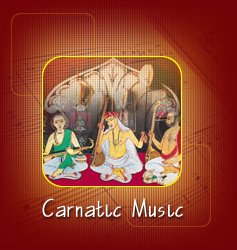
Showing posts with label Trinity. Show all posts

Sunday, August 12, 2007

Shyama Shastri (1762-1827) - Biography and Complete Works


BIOGRAPHY

Shyama Shastri was the oldest of the Trinity of Carnatic music. He was a contemporary of the other two, Tyagaraja and Muthuswami Dikshitar, and was a personal friend of the former. He was born Venkatakrishna, in Tiruvarur (of Thanjavur district in Tamil Nadu) on April 26, 1762, into the scholarly and priestly Tamil Brahmin family of Viswanatha Iyer; a family not particularly interested in music. Though Shyama Shastri attained scholarship in Telugu and Sanskrit at a young age, he got no further than the elementary stages in music education, in spite of his melodious voice. When he was eighteen years old, his family moved to Tanjore.
Around then, his family got a chance to host a sanyasi (monk), sangitaswami, a master of dance and music, who was spending some four months in Tanjore. The sanyasi was quick to discover Shyama Shastri's keen intellect, melodious voice and musical talent and foresaw greatness in him. He obtained the father's consent to tutor the son in music and taught Shyama Shastri all aspects of raga, tala and swara prasthara-s. The teacher found that the student could absorb even the intricate details very quickly, all in a matter of four months or less. Sangitaswami presented Shyama Shastri with a few rare treatises on music and certified that the student had gained full knowledge on the theoretical aspects of music. He advised his student to seek the friendship of and listen to the music (but not learn anything from) one Pachimiriam Adiyappayya Ayya, a composer of the famous bhairavi ata tala varnam, viriboni, and a court musician in Tanjore. Shyama Shastri duly did as he was advised.
Over the years, Shyama Shastri became a well-known and respected musician, scholar and a composer. He was quite admired and respected by Tyagaraja and it appears that the two of them often held scholarly and lengthy discussions on their latest compositions. Shyama Shastri, like his father was the archaka (priest) in the Bangaru Kamakshi Temple in Tanjore. He was a very pious and genuine devotee of Goddess Kamakshi. He is believed to have lost consciousness of the outside world on several occasions as he prayed to the Goddess. On such occasions, he would sing his kriti-s extemporaneously. His father had the patronage of the Tanjore king. Hence, the family was financially comfortable.
Shyama Shastri had two sons, Panju Shastri and Subbaraya Shastri. The former became a priest and the latter was a versatile musician (and a disciple of Tyagaraja). Through Panju Shastri, the family tree grew and produced quite a few scholars. Shyama Shastri's great grandson was alive till the age of 94 and passed away only in 1950. Hence, many incidents of Shyama Shastri's life are known. He was reportedly a tall and a rather stout person with a fondness for betel leaves! Shyama Shastri, like Tyagaraja and Dikshitar, was well-versed in astrology. Like his great contemporaries, he too correctly predicted the time of his passing. He passed away on February 6, 1827, six days after, his devoted wife passed away.
Although he did not compose as many kriti-s as his two prolific contemporaries, Shyama Shastri's compositions are equally well known. It is said that he has composed about three hundred pieces in all. He did not have too many disciples to propagate his compositions, nor was the printing press an easy convenience during his time! More importantly, the scholarly nature of his compositions was not appealing to the layperson; they needed to be studied to be savoured. He composed in Telugu, Sanskrit and Tamil and mostly on Goddess Devi. He has composed kriti-s in, varnam-s and swarajati-s with the ankita/mudra (signature) 'Shyama Krishna'. He is said to be the architect of the swarajati musical form. His set of three famous swarajati-s is referred to as ratna trayam. These are in Bhairavi, Yadukulakambodhi and Todi.
Shyama Shastri's compositionsare usually in common raga-s, except for a few in raga-s such as Manji, Chintamani, Kalagada and Karnataka Kapi. His favourite raga-s seem to have been Saveri and Anandabhairavi, judging from the number of kriti-s composed in these raga-s. Anandabhairavi, an old raga that was frequently used in folk music, seemed to acquire a new stature after he composed masterpieces such as mariveregati, himachala tanaya, o jagadamba, pahi sri giriraja and even a couple of varnam-s in it. His rare originality was in swara sahitya compositions and the use of swarakshara. In other words, swara and sahitya having identical sounding syllables such as 'padasarara' corresponding to the swara-s pa da sa in the kriti, devi ni in Kambodhi. Though most of his compositions are on Goddess Kamakshi, he is said to have composed his navaratnamalika on Goddess Meenakshi of Madurai at the request of a person unknown to him. These include kriti-s such as saroja dala netri in Shankarabharanam, mayamma in Ahiri, meena lochana brova in Dhanyasi , etc. His Krithis usually have the pen-name ShyamaKrishna in the charanam of the song.
Shyama Shastri would perhaps stand out most for the "rhythmic beauties" employed in his kriti-s, such as the use of five-syllable words like sarasamukhi, varamosagu, kamalamukhi, etc. These correspond to the rhythmic phrase "ta dhin gi na thom". His kriti-s feature the abundant use of the misra chapu tala (4+3). He also features dual rhythms as in sankari samkuru in raga saveri, with the inherent rhythm of rupakam and a suggestive rhythm of adi tala. "Shyama Shastri had a rhythmical frame of mind and he was always swimming in the ethereal regions of rhythm and tala prasthara.

Musical Background: Syama Sastri did not come from a family of musicians, but was taught some music by his uncle. Despite being groomed to be a priest, he had plenty of interest and talent in music. He was taught by an ascetic, Sangeeta Swami, about the intricacies of raga and tala.

Region: Syama Sastri was born in Tiruvarur, Tanjavur district, but lived in Tanjavur. He did not travel much.

Contributions

Rhythmic aspects: Some of Syama Sastri’s songs are very rich in rhythmic conception. Though he composed in talas like
Adi, Triputa, Roopaka, etc., he specialised in Misra Chapu, where he not only used the normal pattern (3+4), but also
the reverse (4+3), called the Viloma Chapu. His use of different gatis like Tisra and Misra in his compositions show his
prowess in Laya. There is an interesting incident, which is a testimony to his strength in Laya. He was once challenged by Bobbili
Kesavayya to sing a Pallavi in Simhanandana tala (the longest tala with 128 beats per cycle). To everyone's amazement,
he not only sang it but also composed a new Pallavi in Sarabhanandana tala (79 beats per cycle).

Theme: His compositions were totally devotional in nature, mostly in praise of Goddess Kamakshi of Kanchipuram.

Languages used: Predominantly Telugu; a few in Sanskrit and Tamil.

Signature: Syama Sastri used the mudra, Syamakrishna.

Popular kritis: Kamakshi (Bhairavi), Himadrisute (Kalyani), Sankari Sankuru (Saveri) etc.

Compositions: Shyama Shastri is credited with about 300 songs, of which only about 60 - 70 are available today. He
composed a group of nine kritis known as Navaratnamalika (garland of nine gems) in praise of Goddess Meenakshi of
Madurai temple. He has composed three peerless Swarajatis, collectively known as the Ratnatrayam. He has also
composed a few Varnams, not to mention other compositions in rare ragas, like Chintamani (his own discovery),
Kalagada etc. His favourite raga seems to be Anandabhairavi, in which he has excelled himself.

Compositions Of Shyama Shastri (1762-1827)

These compositions are ordered by Ragam classified by mela. These are fllowed by the song title, specific janya ragam,
and the talam. If you are looking for a particular song in this massive list, I can offer you two suggestions: 1)Hit
CTRL+F or go to the edit menu and select find on your browser and enter the contexts you would like to search for

Melakartas

8. HanumatodiEmani Migula - Todi - Adi Karunanidhi Ilalo - Todi - Rupakam Ninne Namminanu - Todi - Mishra Capu Rave Himagiri Kumari (Svarajati) - Todi - Adi Mina Locana Brova - Dhanyasi - Mishra Capu Enneramum - Punnagavarali - Adi Kanaka Shaila Viharini - Punnagavarali - Adi Brova Samayamu - Punnagavarali - Adi

13. GayakapriyaParvati Ninnu Nera - Kalgada - Tishra Gati Adi

14. VakulabharanamMayammayani Ne - Ahiri - Adi

15. MayamalavagaulaTarunam Idamma - Gaulipantu - Adi Nannu Brovarada - Gaulipantu - Mishra Capu Purahara Jaye - Gaulipantu - Mishra Capu Dayajuda - Jaganmohini - Mishra Capu Kamaksi Karunakataksi - Pharaj - Triputa Triloka Mata Nannu - Pharaj - Mishra Capu Santatam Ennai Raksippai (Gitam) - Pharaj - Adi Nannu Brova - Vasanta - Eka Janani Natajana - Saveri - Adi Durusuga Krpa Juci - Saveri - Adi Sarasaksi (Gitam) - Saveri - Triputa Shahnkari Shamkuru Candramukhi - Saveri - Tishra Gati Adi Shri Patimukha Viracita - Saveri - Adi Rave Mayamma Bahngaru - Saveri - Adi Sarva Sakhi (Gitam) - Saveri - Triputa Nilayataksi - Saveri-Mayamalavagaula-Pharaj - Triputa

17. SuryakantamNannu Brovu Lalita - Lalita - Mishra (Viloma) Capu Namanavini (Varnam) - Saurastram - Caturashra Ata

20. NathabhairaviAdinamunihnci - Anandabhairavi - Triputa O Jagadamba - Anandabhairavi - Adi Pahi Shri Girirajasute - Anandabhairavi - Rupakam Marivere Gati - Anandabhairavi - Triputa Mahilo Amba - Anandabhairavi - Adi Samini Rammanave (Varnam) - Anandabhairavi - Ata Himacala Tanayu - Anandabhairavi - Viloma Capu Bahngaru Kamaksi - Anandabhairavi - Adi Ninnu Namminanu (Pada Varnam) - Anandabhairavi - Adi Sara Saksi I Vela - Anandabhairavi - Ata Kamaksi Amba (Svarajati) - Bhairavi - Mishra Capu Parvati Janani (Gitam) - Bhairavi - Khanda Matya Sari Evaramma - Bhairavi - Jhampa Vanita Ninne (Tana Varnam) - Bhairavi - Adi Brovavamma - Mahnji - Mishra Capu

21. KiravaniBrovumu Manine - Kiravani - Adi

22. KharaharapriyaAkhilandeshvari - Karnataka Kapi - Adi Kamaksi Lokasaksi - Madhyamavati - Triputa Palihncu Kamaksi Pavani - Madhyamavati - Adi Brhannayaki - Madhyamavati - Tishra Matya Palimpavamma Parama Pavani - Mukhari - Adi Ninnu Vina Mari Galada - Ritigaula - Rupakam (Tishra Nadai Adi) Karunajuda Ninnu - Shri - Mishra Capu

28. HarikambhojiDevi Ni Pada Sarasamule - Kambhoji - Adi Ninne Nammiti - Kedaragaula - Adi Parakela Nannu - Kedaragaula - Adi Mayamma Nannu Brova - Natakurahnji - Adi Kamaksi Nipadayugamu (Svarajati) - Yadukulakambhoji - Mishra Capu

29. DhirashahnkarabharanamDevi Mina Netri - Shahnkarabharanam - Adi Saroja Dala Netri - Shahnkarabharanam - Adi Nannu Karunihnci Brovu - Shahnkarabharanam - Rupakam Palayashumam - Arabhi - Triputa Nannu Brovarada - Janarahnjani - Triputa Brovavamma - Nilambari - Triputa Ninnu Vina - Bilahari - Jhampa Kamaksi Natovada - Begada - Adi Dayanidhe Mamava (Varnam) - Begada - Adi Sami Ninne - Begada - Adi

36. CalanataPahi Mam Shri Rajarajeshvari - Nata - Rupakam

39. JhalavaraliKarunajudavamma - Varali - Mishra Capu Kamaksi Bahngaru - Varali - Triputa

53. GamanashramaEnneramum - Purvikalyani - Triputa Ninnuvinaga - Purvikalyani - Deshadi, Mishra Nadai

56. ShanmukhapriyaDevi Brova Samayamide - Cintamani - Adi

65. MecakalyaniTalli Ninnu Nera - Kalyani - Mishra Capu Devi Nannu Brova - Kalyani - Jhampa Nive Gatiyani - Kalyani - Tishra Matya Paramukhamenamma - Kalyani - Triputa Birana Varalicci - Kalyani - Tishra Nadai Adi Rave Parvata Rajakumari - Kalyani - Jhampa Shahnkari Shahnkari - Kalyani - Ata Shri Kamaksi - Kalyani - Adi Himadri Sute Pahimam - Kalyani - Tishra Nadai Adi

MUTHUSWAMI DIKSHITAR (1775 - 1835) - BIOGRAPHY AND COMPLETE WORKS


Muttusvami Dikshitar (1775-1835) - The youngest of the Carnatic Musical Trinity was born in 1776, brought up with 2 brothers and a sister with great care and acquiring proficiency in both music and Sanskrit. His family moved to Manali, where he became a disciple of Cidambaranaata Yogi and went to Varanaasi. For 5 years he stayed there and learned Hindustani music, especially the Dhrupad style of music. After his guru died, he returned to the south and came to the holy shrine of Tiruttani to pray and meditate before Lord Subramanya. One day the Lord appeared to him, asked him to open his mouth, placed a piece of sugar candy in his mouth, and disappeared. After this, Dikshitar began composing beautiful kritis. The first piece he sang was "ShreenataDi guruguhO jayati jayati." Then he went to Kaanceepuram and sang songs in praise of Ekaambaratanaata and Kaamaakshi. He visited various temples to compose songs, from the TaamrapaaNi River (Shree kaantimateem) and Rameshwaram (Raamanaatham bhajEham) to Kaasi (Kaasi visaalakshi). Then he returned to Tiruvaaroor, where he gathered disciples and taught them his composition. His brothers became proficient at rendering his compositions as well and went to Madurai to teach these songs. Once, because of poverty, Dikshitar did not have the means to make his offerings to the deity. His disciple, the famous dancer Kamalam, offered to pledge her jewels and raise the money. He refused and composed "Tyaagaraajam bhajarE," trusting in God. Soon 2 cartloads of food and articles reached his house as a gift from the manager of the choultry. After the death of his brother Cinnaswaami, his brother Baalaswaami left and was made a Samastaana Vidwaan at ETTayapuram in 1824. Dikshitar left to meet his suriving brother, and on the way fervently sang "Aanandaamruta" in amritavarshini, seeing the dry condition of the land. Apparently, there was a heavy downpour soon afterward. Dikshitar met his brother and attended his marriage as well. Then he returned to Tiuvaaroor. His group kritis include the navagraha kritis in praise of the 7 principal planets and the Kamalaambaa navaavarana kritis - 9 songs in praise of the deity of Tiruvaaroor. He also composed small kritis with SamaashTi caraNams (which include both Anupallavi and CaraNam). 461 songs in 191 raagams are available today. He used characteristic phrases of raagam and was a master of rhyme. He often chose a slow tempo. In 1835 he went to ETTaiyapuram to attend a marriage in the royal family and stayed there. "Meenaakshi mE mudam" is supposed to be one of his last compositions, created in Madurai on his way to ETTaiyapuram, where he passed away on October 21, 1835

Early years

Consistent with the education of Brahmin boys of that time, Muttuswami learnt the Vedas, Sanskrit and other important religious texts. He also obtained his preliminary musical education from his father. While he was still in his teens, his father sent him on a pilgrimage with a wandering monk named Chidambaranatha Yogi, to gain musical and philosophical knowledgde. Over the course of this pilgrimage, he visited many places in North India, and acquired a broad outlook that is reflected in many of his compositions. During their stay in Kashi (Varanasi), his guru Chidambarantha Yogi, presented him with a unique Vina, and passed away shortly thereafter. The Samadhi of Chidambaranatha Yogi can still be seen in the Hanuman Ghat area in Varanasi.
Muttuswami Dikshitar attained mastery over the Vina instrument, and the influence of Vina playing is evident in his compositions. He composed his first song "Sri nathadhi guruguho" in the Raga Maya-malava-gowla, in the temple of Tiruttani (near present day Chennai). The song was in praise of his Guru, but also in praise of the Lord Subramanya, who is identified with the concept of a "teacher" or guru in the Hindu theology.

Contribution

Muthuswami Dikshitar, it is said, composed his first kriti after having a vision of Lord Subramanya, his favourite deity. He composed the Vara kritis, which are seven in number, one for each day of the week. These are set to the Sooladi Sapta talas. Drawing inspiration from Oothukadu Venkata Kavi, he also composed the Navavarana kritis in praise of Devi (Kamalamba), one for each of the nine days of the Navaratri festival. Being a widely travelled man, he composed several songs in many Hindustani ragas. His songs are normally slow in tempo and bring out the depth and beauty of the raga using ornamentation (gamakas). He also used what is known as Madhyamakala (medium tempo) Sahitya very effectively in his compositions.

Theme

That he was a much-travelled man is reflected in his compositions. Most of them contain descriptions about famous temples and their chief deities. There are also several others based on Vedas, Upanishads, Tantra, etc.

Languages used
Mostly Sanskrit and a few in Telugu. He has also composed Manipravala kritis, which is a mixture of two or more languages.

Signature: His signature or mudra is Guruguha, which is another name for Lord Subramanya.

Mudra: Guruguha

Popular kritis: Vatapi Ganapatim (Hamsadhwani), Annapoorne (Sama), Kanjadalayatakshi (Kamalamanohari) and so on.

Compositions Of Muthuswamy Dikshitar (1776-1827)

These compositions are ordered by Ragam classified by mela. These are followed by the song title, specific janya ragam, and the talam. If you are looking for a particular song in this massive list, I can offer you two suggestions: 1)Hit CTRL+F or go to the edit menu and select find on your browser and enter the contexts you would like to search for.

Melakartas:

1. Kanakambari - Kanakahngi

Kanakambari Karunyamrta Lahari - Kanakambari - Rupakam Akhilandeshvaro Raksatu - Shuddha Saveri - Rupakam
Ekamreshanayike - Shuddha Saveri - Adi
Muraharena Mukundea - Shuddhamukhari - Rupakam

2. Phenadyuti - Ratnangi

Shri Daksinamurtimisham - Phenadyuti - Adi

3. Ganasamavarali - Ganamurti

Brhadishvaro Raksatumam - Ganasamavarali - Rupakam Parameshvarena - Purvavarali - Adi
Matsyavatara Mamava - Bhinnapahngamam -Adi

4. Bhanumati - Vanaspati

Guruguhasvamini - Bhanumati - Khanda Triputa Talam
Brhadamba Madamba - Bhanumati - Adi

5. Manorahnjani - Manavati
Balambike Pahi - Manorahnjani - Matyam

6. Tanukirti - Tanarupi Cidambara Natarajamurtim - Tanukirti - Mishra Capu

7. Senagrani - Senavati
Jhnanambike Palaya Mam - Senagrani - Tishra Ekam

8. Janatodi - HanumatodiTodi - Rupakam Todi - Rupakam Mahaganapatim Vande - Todi - Rupakam Palaya Mam Brhadishvari - Todi - Rupakam Ramacandraya - Todi - Mishra Capu Vedaranyeshvaraya - Todi - Adi Shri Krsnam Bhaja Manasa - Todi - Adi Shri Subrahmanyo Mam Raksatu - Todi - Adi Kumarasvaminam - Asaveri - Adi Candram Bhaja Manasa - Asaveri - Caturashra Matyam Ganalole - Nagavarali - Mishra Capu Ehi Annapurne- Punnagavarali - Adi Kamalambikayastava Bhaktoham - Punnagavarali - Rupakam

9. Dhunibhinnasadjam - DhenukaCidambareshvam - Dhunibhinnasadjam - Adi Shri Guruguhamurte - Udayaravicandrika - Rupakam Sadacaleshvaram Bhavaye - Bhupalam - Adi Mohananataragapriye Lalite - Mohananata - Adi

10. Natabharanam - NatakapriyaVishvanatham Bhajeham - Natabharanam - Adi

11. Kokilaravam - KokilapriyaKodandaramam - Kokilaravam - Adi

12. RupavatiShri Krsnam Bhajare - Rupavati - Tishra Ekam

13. Geyahejjajji - GayakapriyaRamacandrabhaktam - Geyahejjajji - Adi

14. Vativasantabhairavi - VakulabharanamPrasannavehnkatesham - Vativasantabhairavi - Triputa Brhadishvarim Bhajare - Lalitapahncamam - Adi

15. MayamalavagaulaNilotpalambikayastava - Mayamalavagaula - Mishra Capu Shri Nathadi Guruguho Jayati - Mayamalavagaula - Adi Shri Ganeshatparam - Ardradeshi - Jhampa Agastishvaram - Lalita - Mishra Capu Hiranmayim Laksmim - Lalita - Rupakam Renukadevi - Kannada Bahngala - Mishra Jhampa Gunijanadi - Gujjari - Adi Rajarajendra - Gundakriya - Triputa Tyagaraja Palaya - Gaula - Adi Nilotpalambikayah Param - Gaula - Rupakam Mahisasuramardini - Gaula - Khanda Capu Shri Mahaganapati- Gaula - Mishra Capu Krsnananda Mukundamurare - Gaulipantu - Mishra Capu Gauri Girirajakumari - Gauri - Rupakam Shri Minaksi Gauri - Gauri - Rupakam Nilotpalambike - Chayagaula - Rupakam Sarasvatya Bhagavatya Samraksitoham - Chayagaula - Mishra Capu Namaste Paradevate - Devarahnji - Tishra Ekam Sundaramurtim Ashrayami - Takka - Rupakam Nilakanthaya - Nadanamakriya - Mishra Capu Pratyahngirabhagavatim - Nadanamakriya - Mishra Capu Shri Guruna Palitosmi- Padi - Rupakam Cintaye Mahalihnga - Pharaj - Adi Madhuramba Jayati - Pharaj - Mishra Capu Mahalihngeshvaram - Pharaj - Adi Shri Shukrabhagavantam- Pharaj - Khanda Ata Sadhujanacitta Sarasijodayam - Purnapahncamam - Triputa Shri Guruguhasya Dasoham - Purvi - Mishra Capu Shri Parvatiparameshvarau Vande- Bauli - Adi Shri Bhargavi - Mahngalakaishiki - Mishra Capu Pahncamatahngamukha Ganapatina - Malahari - Rupakam Vighineshvaram - Malahari - Adi Vasudevamupasmahe - Malavapahncamam - Rupakam Maruvakadi Malini Sulini - Maruva - Adi Mahngaladevate Paradevate - Margadeshi - Adi Vehnkateshvara Yadava Bhupatim - Megharahnjani - Rupakam Govindarajena Raksitoham - Mecabauli - Rupakam Rama Rama - Ramakali - Rupakam Sharavanabhava - Revagupti - Rupakam Sadavinathasadare - Revagupti - Rupakam Nilakantha - Vasanta - Rupakam Brhadambikayai - Vasanta - Mishra Capu Marakatalihngam - Vasanta - Adi Ramacandram Bhavayami - Vasanta - Rupakam Hariharaputram- Vasanta - Khanda Ekam Avyajakarunakataksi - Salahnganata - Tishra Triputa Karikalabhamukham- Saveri - Rupakam Shri Rajagopala - Saveri - Adi Gokarneshvara - Saurastram - Adi Varalaksmim - Saurastram - Adi Suryamurte Namostute- Saurastram - Caturashra Dhruvam

16. Toyavegavahini - CakravakamKailasanatham - Vegavahini - Adi Gajananayutam - Vegavahini - Caturashra Ekam Varahim Vaisnavim - Vegavahini - Mishra Capu Vinayaka Vihna - Vegavahini - Rupakam Vinapustakadharinim - Vegavahini - Khanda Ekam

17. Chayavati - SuryakantamChayavatim Anandavallim - Chayavati - Adi

18. Jayashuddhamalavi - HatakambariNaraharimashrayami - Jayashuddhamalavi - Triputa

19. Jhahnkarabhramari - JhahnkaradhvaniHimacalakumarim Bhaje - Jhahnkarabhramari - Rupakam

20. Nariritigaula - NatabhairaviNilotpalambam- Nariritigaula - Mishra Capu Shri Nilotpalanayike - Nariritigaula - Rupakam Abhayamba Nayaka Harisayaka - Anandabhairavi - Adi Anandeshvarena - Anandabhairavi - Mishra Capu Kamalamba Samraksatu Mam- Anandabhairavi - Mishra Capu Tyagarajayogavaibhavam - Anandabhairavi - Rupakam Dandayudhapanim - Anandabhairavi - Rupakam Paradevate - Anandabhairavi - Adi Manasa Guruguha - Anandabhairavi - Rupakam Sami Ni - Anandabhairavi - Adi Vinabheri- Abheri - Adi Kusumakara - Ahiri - Adi Shri Kamalamba Jayati- Ahiri - Rupakam Balakrsnam - Gopikavasantam - Adi Shri Kamalambike Avava - Ghanta - Adi Shri Mahngalambikam - Ghanta - Jhampa Paradevata Brhatkucamba - Dhanyashi - Adi Mahngaladevataya - Dhanyashi - Rupakam Mayuranatham - Dhanyashi - Mishra Capu Ramacandradanyam - Dhanyashi - Khanda Capu Vedapurishvaram - Dhanyashi - Adi Shri Rahnganathaya - Dhanyashi - Rupakam Navaratna Vilasa Vaibhava - Navaratnavilasam - Adi Nagagandhari - Nagagandhari - Adi Sarasijanabha Sodari- Nagagandhari - Rupakam Aryam Abhayambam Bhajare - Bhairavi - Khanda Jati Ata Cintaya Makanda - Bhairavi - Rupakam Trilocanamohinim - Bhairavi - Adi Devi Jagadishvari - Bhairavi - Rupakam Balagopala - Bhairavi - Adi Lalitambikayai - Bhairavi - Mishra Capu Shri Kamalambikayah Param Nahi Re- Bhairavi - Mishra Jhampa Ramacandrena - Mahnji - Rupakam Shri Sarasvati Hite - Mahnji - Adi Candrasekharam- Margahindolam - Adi Margahindolaraga - Margahindolam - Adi Ekamranathaya - Mukhari - Rupakam Govindarajam - Mukhari - Mishra Capu Pahi Mam Ratnacalanayaka - Mukhari - Adi Govarddhana Girisham - Hindolam - Rupakam Nirajaksi Kamaksi - Hindolam - Rupakam Sarasvati Vidhiyuvati- Hindolam - Rupakam Tyagaraja - Hindolam - Rupakam Santana Ramasvaminam- Hindolavasantam - Adi

21. Kiranavali - KiravaniPahncabhutakiranavalim - Kiranavali - Khanda Ekam Shri Vehnkatesham - Kalyanavasantam

22. Shri Raga - KharaharapriyaKameshvarena - Shri - Adi Tyagaraja Mahadhvajaroha - Shri - Adi Shri Abhayamba - Shri - Adi Shri Kamalambike- Shri - Khanda Ekam Shri Muladharacakravinayaka - Shri - Adi Shri Varalaksmi - Shri - Rupakam Shri Laksmivaraham- Abhogi - Adi Nilotpalambikaya - Kannadagaula - Adi Balambikayah - Kanada (Kapi) - Adi Vishveshvaro Raksatu - Kanada (Kapi) - Adi Virahanumate Namo- Kapi - Rupakam Vehnkatacalapate - Kapi - Adi Shri Maharahnji (Manipravalam) - Kapi - Khanda Ekam Kayarohanesham- Devagandharam - Rupakam Pahncashatpitharupini- Devagandharam - Adi Tripurasundari - Devamanohari - Adi Bharati Mathisna - Devamanohari - Rupakam Mahadevena - Devamanohari - Adi Varahim - Devamanohari - Triputa Tyagarajadanyam - Darbar - Adi Halasyanatham - Darbar - Adi Palaya Mam Brhadishvara - Nayaki - Rupakam Pranatartiharam - Nayaki - Adi Rahnganayakam Bhavayeham- Nayaki - Adi Rahngapuravihara - Brndavana Sarahnga - Rupakam Saundararajam Ashraye - Brndavana Sarahnga - Rupakam Svaminathena - Brndavana Sarahnga - Adi Kalabhairavam - Bhairavam - Rupakam Mamava Pattabhirama - Manirahngu - Mishra Capu Dharmasamvardhani- Madhyamavati - Rupakam Pannagashayana - Madhyamavati - Adi Mahatripurasundari - Madhyamavati - Rupakam Shri Rajarajeshvarim - Madhyamavati - Rupakam Kanakasabhapatim - Malavashri - Adi Mahngalambayai Namaste - Malavashri - Jhampa Mahalaksmi Karunarasalahari - Madhavamanohari - Adi Gananayakam Bhajeham Bhaje - Rudrapriya - Adi Tyagesham Bhajare - Rudrapriya - Adi Parashaktim - Rudrapriya - Adi Rudrakopa - Rudrapriya - Rupakam Shivakayarohaneshaya - Rudrapriya - Rupakam Shri Tyagarajasya - Rudrapriya - Mishra Capu Shri Parthasarathina - Shuddha Dhanyashi - Rupakam Subrahmanyena Raksitoham - Shuddha Dhanyashi - Adi Kamaksi Mam Pahi - Shuddhadeshi - Rupakam Ni Sati Daivamu (Telugu Daru) - Shrirahnjani - Rupakam Parvatarajakumari - Shrirahnjani - Adi Balambikaya - Shrirahnjani - Caturashra Ekam Shri Dum Durge - Shrirahnjani - Khanda Ekam Shri Ramacandro - Shrirahnjani - Mishra Capu Abhayambayam Bhaktim Karomi - Sahana - Triputa Ishanadi Shivakaramahnce - Sahana - Rupakam Ramakrsnena - Sahana - Adi Shri Kamalambikayam Bhaktim Karomi - Sahana - Tishra Triputa Tyagarajena - Salagabhairavi - Adi Saindhaviragapriye - Saindhavi - Adi Paradevate Bhaktapujite - Huseni - Adi Shri Kalahastisha - Huseni - Khanda Capu

23. Gaurivelavali - GaurimanohariKaumari Gauri Velavali - Gaurivelavali - Adi Parashakti Ishvari - Gaurivelavali - Adi

24. Viravasantam - VarunapriyaEkamranathaya - Viravasantam - Rupakam Viravasanta Tyagaraja - Viravasantam - Adi

25. Sharavati - MararahnjaniSharavatitata - Sharavati - Rupakam

26. Tarahngini - CarukeshiPalaya Mam Parameshvari - Tarahngini - Rupakam Maye Tvam Yahi - Tarahngini - Adi

27. Saurasena - SarasahngiSaurasenesham Vallisham - Saurasena - Adi

28. Harikedaragaula - HarikambhojiAbhayamba Nayaka Varadayaka - Kedaragaula - Adi Abhayambaya Anyam Na Jane - Kedaragaula - Jhampa Nilakantham Bhajeham - Kedaragaula - Rupakam Nilotpalambikayai - Kedaragaula - Adi Balambikayah - Kedaragaula - Rupakam Tyagarajo - Atana - Rupakam Brahaspate Tarapate - Atana - Tishra Triputa Mahalihngeshvaraya - Athana - Adi Vamahngastitaya - Athana - Khanda Ekam Shri Daksinamurtim - Athana - Khanda Ekam Shri Madhurambikaya - Athana - Mishra Capu Shri Vaidyanatham - Athana - Adi Herambaya - Athana - Rupakam Brhannayaki - Andhali - Adi Ananta Balakrsna - Ishamanohari - Adi Jagadishamanohari - Ishamanohari - Rupakam Shri Gananatham - Ishamanohari - Rupakam Giticakrarathastitayai - Kannada - Mishra Capu Palaya Mam Parvatisha - Kannada - Rupakam Shri Matrbhutam - Kannada - Mishra Capu Dandanathaya - Kamas - Adi Shri Svaminathaya - Kamas - Khanda Capu Sadanane - Kamas - Adi Santanagopalakrsnam - Kamas - Rupakam Sarasadalanayana - Kamas - Triputa Enta Ninne Dhelupudura - Kamas - Tishra Ekam Kamalambikayai Kanakamshukayai - Kambhoji - Khanda Ata Kashi Vishveshvara Ehi - Kambhoji - Ata Kailasanathena - Kambhoji - Mishra Capu Gopalakrsnaya Namaste - Kambhoji - Adi Marakatavallim Manasa - Kambhoji - Adi Shri Valmikalihngam - Kambhoji - Ata Shri Subrahmanyaya Namaste - Kambhoji - Rupakam Sambasadashivaya - Kambhoji - Adi Sarasvati Chayatarahngini - Chayatarahngini - Adi Gahnge Mam Pahi - Juhnjuthi - Khanda Ekam Gajamba Nayako - Juhnjuthi - Mishra Capu Ganesha Kumara - Juhnjuthi - Caturashra Ekam Akhilandeshvari - Jujavanti - Adi Cetas Shri Balakrsnam Bhajare- Jujavanti - Rupakam Shrirama - Jujavanti - Rupakam Madhuramba Samraksatu - Devakriya - Adi Lalitambikam - Devakriya - Adi Shri Guruguha Tarayasumam- Devakriya - Rupakam Shri Vatukanatha - Devakriya - Mishra Capu Sandhya Devim - Devakriya - Adi Mahaganapate Palayasu - Natanarayani - Adi Gajadishadanyam - Natakurahnji - Mishra Capu Parvatikumaram - Natakurahnji - Rupakam Balambikayai - Natakurahnji - Rupakam Budham Ashrayami- Natakurahnji - Mishra Jhampa Shivakamipatim - Natakurahnji - Adi Nilotpalamba Jayati - Narayanagaula - Mishra Capu Shri Ramam Ravikulabdhi - Narayanagaula - Adi Guruguhadanyam - Balahamsa - Jhampa Mamava Raghuvira - Mahuri - Mishra Capu Abhayambikayai Ashvarudhayai- Yadukulakambhoji - Rupakam (2 Kalai) Tyagarajam Bhajare - Yadukulakambhoji - Mishra Capu Divakaratanujam Shanaishcaram- Yadukulakambhoji - Caturashra Ekam Annapurne Vishalaksi - Sama - Adi Guruguhaya - Sama - Adi Tripurasundari - Sama - Rupakam Parvatavardhani - Sama - Adi Ahngarakam Ashrayami Aham- Surati - Rupakam Govindarajaya Namaste - Surati - Rupakam Balakucambike - Surati - Rupakam Balasubrahmanyam - Surati - Adi Lalitaparameshvari - Surati - Adi Shri Vahncanatha - Surati - Adi Shri Vehnkatagirisham - Surati - Adi

29. DhirashahnkarabharanamAksayalihngavibho - Shahnkarabharanam - Mishra Capu Gajananaya Namaste - Shahnkarabharanam - Rupakam Girijayajaya Abhayamibikaya - Shahnkarabharanam - Adi Tarakeshvara - Shahnkarabharanam - Adi Daksinamurte - Shahnkarabharanam - Mishra Jhampa Nagalihngam Bhajeham - Shahnkarabharanam - Adi Pavanatmajam - Shahnkarabharanam - Adi Brhadishvaraya - Shahnkarabharanam - Adi Shri Kamalambikaya Kataksitoham- Shahnkarabharanam - Rupakam Shri Venugopalam - Shahnkarabharanam - Rupakam Sadashivamupasmahe - Shahnkarabharanam - Adi Sundareshvaraya - Shahnkarabharanam - Rupakam Shahnkarabharanam Nottusvara: Ahnjaneyam - Tishra Ekam Kamalasana - Caturashra Ekam Kahncisham - Tishra Ekam Guruguha Sarasija - Caturashra Ekam Guruguhapadapahnkaja - Tishra Ekam Gurumurte - Rupakam Cintayeham Sada - Caturashra Ekam Jagadisha - Caturashra Ekam Dasharathe - Tishra Ekam Dinabandho - Tishra Ekam Pahnkajamukha - Tishra Ekam Paradevata - Tishram Paradevate - Rupakam Parvatipate - Caturashra Ekam Pahi Durge - Caturashra Ekam Pahi Mam - Tishra Ekam Pitavarnam - Tishra Ekam Maye Citkale - Tishra Ekam Mucukundavarada - Tishra Ekam Rajivalocanam - Tishra Ekam Rama Janardana - Tishra Ekam Ramacandram - Caturashra Ekam Vande Minaksi - Caturashra Ekam Varadaraja Pahi - Tishra Ekam Varashivabalam - Caturashra Ekam Vagdevi - Caturashra Ekam Shaktisahita - Tishra Ekam Shahnkaravara - Rupakam Shaurividhi Nute - Caturashra Ekam Shyamale Minaksi - Caturashra Ekam Shri Shahnkara - Tishram Sakalasuravinuta - Caturashra Ekam Sadashiva Jaye - Caturashra Ekam Santatam Govindarajam - Tishra Ekam Santatam Pahimam - Tishra Ekam Santanasaubhagya - Tishra Ekam Samaganapriye - Caturashra Ekam Subrahmanyam - Caturashra Ekam Somaskandam - Tishra Ekam He Maye - Tishra Ekam Akhilandeshvaryai - Arabhi - Adi Adipurishvaram - Arabhi - Adi Ganarajena - Arabhi - Mishra Capu Gaurishaya Namaste - Arabhi - Triputa Marakoti Koti Lavanya - Arabhi - Jhampa Shivakameshvaram - Arabhi - Adi Shri Sarasvati Namostute - Arabhi - Rupakam Shvetaranyeshvaram - Arabhi - Adi Shri Venugopala - Kurahnji - Jhampa Ambikaya Abhayambikaya- Kedaram - Adi Anandanatanaprakasham - Kedaram - Mishra Capu Cidambara Natarajam - Kedaram - Adi Kumbheshvaraya - Kedaram - Rupakam Ksitijaramanam - Devagandhari - Adi Vadanyeshvaram - Devagandhari - Adi Shalivatishvaram - Devagandhari - Adi Shri Minambikayah - Devagandhari - Rupakam Amba Nilayataksi - Nilambari - Adi Tyagarajam Bhajeham - Nilambari - Rupakam Nilahngam - Nilambari - Khanda Ekam Siddhishvaraya - Nilambari - Mishra Capu Hastivadanaya Namastubhyam - Navaroj - Mishra Capu Brhadishvaram Bhajare - Nagadhvani - Adi Shahnkaranarayanam - Narayanadeshaksi - Adi Mahisasuramardinim - Narayani - Mishra Capu Shahnkhacakragadha Panim - Purnacandrika - Rupakam Shri Rajarajeshvari - Purnacandrika - Adi Shri Rahnganathamupasmahe - Purnacandrika - Adi Nilotpalambikayam - Purvagaula - Rupakam Ekadantam Bhajeham - Bilahari - Mishra Capu Kamaksi Varalaksmi - Bilahari - Adi Shri Balasubrahmanyagaccha - Bilahari - Mishra Capu Shri Madhurapuriviharini - Bilahari - Rupakam Shri Sambashivam - Bilahari - Adi Hatakeshvara - Bilahari - Rupakam Tyagarajaya Namaste - Begada - Rupakam Madhurambayah - Begada - Mishra Capu Vallabhanayakasya Bhakto - Begada - Rupakam Shri Matah Shivavamahnge - Begada - Adi Somasundareshvaram - Shuddhavasantam - Adi Sarasvati Manohari Shahnkari - Sarasvatimanohari - Adi Parvatipatim - Hamsadhvani - Adi Vatapi Ganapatim Bhajeham - Hamsadhvani - Adi

30. Nagabharanam - NaganandiniNagabharanam - Nagabharanam - Adi Pranatartiharaya - Samanta - Adi Vishvanathena - Samanta - Adi

31. Kalavati - YagapriyaKalavati Kamalasana Yuvati - Kalavati - Adi

32. Ragacudamani - RagavardhaniShvetaganapatim - Ragacudamani - Triputa

33. Gahngatarahngini - GahngeyabhusaniVaradaraja Vava Vahncitadhika - Gahngatarahngini - Rupakam Kahnjadalayataksi Kamaksi Kamalamanohari Tripurasundari - Manohari - Adi Shahnkaramabhiramimanoharam - Manohari - Rupakam

34. Bhogachayanata - VagadishvariBhogachayanatakapriye - Bhogachayanata - Adi

35. Shailadeshaksi - ShuliniShailarajakumari - Shailadeshaksi - Adi Shri Shulinim Shri Tapalini - Shailadeshaksi - Adi

36. Calanata - CalanataParameshvara Jagadishvara - Calanata - Adi Pavanatmajagaccha - Calanata - Jhampa Mahaganapatim Manasa Smarami - Calanata - Caturashra Ekam Svaminatha Paripalayasumam - Calanata - Adi Sakala Sadanakela - Nata

37. Saugandini - SalagamKamakotipithavasini - Saugandini - Adi

38. Jaganmohini - JalarnavamShri Vidya Rajagopalam - Jaganmohini - Tishra Ekam

39. Dhalivarali - JhalavaraliMamava Minaksi - Varali - Mishra Capu Lambodaraya - Varali - Khanda Capu Shesacalanayakam - Varali - Rupakam

40. Nabhomani - NavanitamNabhomani Candrahni Nayanam - Nabhomani - Mishra Capu Shri Nathasodarim - Nabhomani - Rupakam

41. Kumbhini - PavaniSaccidanandamaya - Kumbhini - Adi

42. Ravikriya - RaghupriyaHimagirikumari Ishvari - Ravikriya - Adi

43. Girvani - GavambodhiNamonamaste Girvani - Girvani - Mishra Capu

44. Bhavani - BhavapriyaJayati Shiva Bhavani - Bhavani - Rupakam

45. Shivapantuvarali - ShubhapantuvaraliPashupatishvaram - Shivapantuvarali - Adi Shri Satyanarayanam - Shivapantuvarali - Rupakam Sadashivena - Sindhuramakriya - Adi Bhagavatishvaram - Shubhapantuvarali - Adi

46. Stavarajam - SadvidhamarginiMadhurambam Bhajare - Stavarajam - Adi Stavarajadinuta - Stavarajam - Mishra Capu

47. Sauviram - SuvarnahngiSarasa Sauvira - Sauviram - Adi

48. Jivantika - DivyamaniBrhadishakataksena - Jivantika - Rupakam

49. Dhavalahngam - DhavalambariShrhngaradi - Dhavalahngam - Khanda Ekam

50. Namadeshi - NamanarayaniNarmada Kaveri Nilaiye - Namadeshi - Mishra Capu

51. Kashiramakriya - KamavardhiniUccista Ganapatau - Kashiramakriya - Adi Margasahayashvaram - Kashiramakriya - Mishra Capu Ramanatham Bhajeham - Kashiramakriya - Rupakam Vishalaksim Vishveshim - Kashiramakriya - Triputa Shri Sundararajam - Kashiramakriya - Adi Senapate - Kashiramakriya - Adi Arddhanarishvaram - Kumudakriya - Rupakam

52. Ramamanohari - RamapriyaMatahngi Shriraja - Ramamanohari - Rupakam Shrhngarashaktyayudha - Ramamanohari - Jhampa Smaramyaham Sada Rahum - Ramamanohari - Rupakam

53. Gamakakriya - GamanashramaEkamranatham - Gamakakriya - Adi Kashi Vishalaksim - Gamakakriya - Rupakam Tiruvatishvaram - Gamakakriya - Rupakam Navaratnamalinim - Gamakakriya - Khanda Ekam Minaksi Me Mudam Dehi - Gamakakriya - Adi

54. Vamshavati - VishvambariBhaktavatsalam - Vamshavati - Adi Vamshavati - Vamshavati - Adi

55. Shyamalam - ShyamalahngiShyamalahngi - Shyamalam - Adi

56. Camaram - ShanmukhapriyaEkamreshanayakim - Camaram - Adi Sadashraye Abhayambike - Camaram - Rupakam Siddhivinayakam Anisham- Camaram - Rupakam Mahasuram Ketumaham<- Camaram/Rupakam

57. Sumadyuti - SimhendramadhyamamKamaksi Kamakoti Pithavasini - Sumadyuti - Rupakam Nilacalanatham - Sumadyuti - Adi Pamarajanapalini - Sumadyuti - Rupakam Shaileshvaram - Sumadyuti - Adi

58. Deshisimharavam - HemavatiMadhurambikayam - Deshisimharavam - Rupakam Shri Kantimatim - Deshisimharavam - Adi Hariyuvatim Haimavatim - Deshisimharavam - Rupakam

59. Dhamavati - DharmavatiParandhamavati Yuvati- Dhamavati - Rupakam Ramacandrasya - Dhamavati - Adi

60. Nisadam - NitimatiNisadadi Deshadhipatinuta - Nisadam - Mishra Capu

61. Kuntalam - KantamaniShri Sugandhikuntalambike - Kuntalam - Rupakam

62. Ratipriya - RishabhapriyaMararatipriyam Bhaktipriyam - Ratipriya - Adi

63. Gitapriya - LatahngiSadhujanavinutam - Gitapriya - Triputa

64. Bhusavati - VacaspatiAbhiramim - Bhusavati - Rupakam Parvatishvarena - Bhusavati - Adi Bhusavatim - Bhusavati - Rupakam

65. Shantakalyani - MecakalyaniAbhayamba Jagadamba Raksatu - Kalyani - Adi (2 Kalai) Kamalambam Bhajare - Kalyani - Adi Kamaksim Kalyanim - Kalyani - Rupakam Kumbheshvaraya - Kalyani - Mishra Capu Kumbheshvarena Samraksitoham - Kalyani - Adi Ganapate - Kalyani - Rupakam Jhnanaprasunambike - Kalyani - Rupakam Brahmavidyambike - Kalyani - Adi Bhajare Re Citta - Kalyani - Mishra Capu Shivakameshvarim Cintayeham - Kalyani - Adi Shri Mahngalambike - Kalyani - Ata Shri Madhurambike - Kalyani - Khanda Capu Kadambaripriyayai - Mohanam - Mishra Capu Gopika Manoharam - Mohanam - Rupakam Narasimha Agaccha - Mohanam - Mishra Capu Nagalihngam Namami - Mohanam - Adi Pahi Mam Parvati - Mohanam - Rupakam Raktaganapatim - Mohanam - Adi Rajagopalam - Mohanam - Rupakam Jambupate - Yamunakalyani - Rupakam Nandagopala Mukundagokul - Yamunakalyani - Adi Paramashivatmajam - Yamunakalyani - Adi Arunacalanatham - Sarahnga - Rupakam Tyagaraje Krtyakrtyam - Sarahnga - Jhampa Varadarajamupasmahe - Sarahnga - Rupakam Sarahngaragapriye - Sarahnga - Mishra Capu Parimalarahnganatham - Hamirkalyani - Rupakam Puraharanandana - Hamirkalyani - Adi

66. Caturahngini - CitrambariEkamranatheshvarena - Caturahngini - Adi Guruguha Bhavantarahnginim - Caturahngini - Mishra Capu Anandamrtakarsini Amrtavarsini - Amrtavarsini - Adi Himagirikumari - Amrtavarsini - Adi

67. Santanamahnjari - SucaritramSantanamahnjari - Santanamahnjari - Adi

68. Jyoti Raga - JyotisvarupiniParamjyotismati Parvati - Jyoti - Adi Rame Bharatapalita - Jyoti - Khanda Capu

69. Dhautapahncamam - DhatuvardhaniMatahngi Marakatahngi - Dhautapahncamam - Rupakam

70. Nasamani - NasikabhusaniShri Krsno Mam Raksatu - Nasamani - Rupakam Shri Rama Sarasvatisevitam - Nasamani - Adi

71. Kusumakaram - KosalamKusumakarashobhita - Kusumakaram - Rupakam

72. Rasamahnjari - RasikapriyaShrhngararasamahnjarim - Rasamahnjari - Rupakam

Monday, July 9, 2007

Biography Of Sri Thyagaraja Swami

Sri Tyagaraja Swami
(1767 - 1847 AD)

Tyagaraja (Telugu: శ్రీ త్యాగరాజ; d. 1848) was one of the most important composers of Carnatic music. He is regarded as one of the "trinity" of Carnatic music composers, along with Muthuswami Dikshitar and Syama Sastri. He was a devotee of Rama.

Sri Tyagaraja, the most celebrated Carnatic Music saint was a great devotee of Lord Sri Rama. Tyagaraja lived to the full extent that God realization is best achieved through Nadopasana (music with devotion). His songs are filled with an intimate devotion to Rama, all through revealing his deep understanding of the tenets of the Vedas and Upanishads.

Saint Purandaradas is considered as the grandfather of Carnatic Music. Sri Tyagaraja, along with Muthuswami Dikshitar and Syama Sastri are considered as the "Trinity of Carnatic Music." Sri Tyagaraja has composed about 24,000 songs in his long devoted life to Lord Rama, most of them written in his Mother tongue Telegu, but a few in Sanskrit, including the masterpiece "Jagadanandakaraka" composed of 108 names describing Lord Rama's attributes. But, his songs are well loved in Tamil Nadu, the seat of South Indian (Carnatic) Music scholarship and performance.

Biography

In Thiruvarur in the Thanjavur district of present-day Tamil Nadu, in the Hindu lunar year Sarvajit 27th Soma, on Chaitra Sukla Sapthami, the 7th day of the bright half of the Hindu month of Chaitra, under the Pushya nakshatram [star], that is on May 4, 1767, a son was born to Kakarla Ramabrahmam and his wife Seethamma. According to another tradition, the year of his birth was 1759.

The boy was named Tyagaraja, after Lord Tyagaraja, the presiding deity of Thiruvarur. Tyagaraja's father Rama Brahmam taught him to worship Rama daily and initiated him in Rama taraka mantra. Even as a boy, Tyagaraja composed his first song on Rama, Namo Namo Raghavaya when he was only 13 years old. Sri Tyagaraja continued to recite the Rama Nama every day and had many darsans of Sri Rama, which inspired him to write songs on his beloved Lord, Sri Rama. His maternal grandfather, Giriraja Kavi, at whose residence in Tiruvarur Thyagaraja was born, was a poet-composer attached to the court of Thanjavur. The family was a pious Telugu-speaking smartha brahmin family of the vaidiki Mulukanadu sub-caste. They are said to have hailed from a village named Kakarla in the Prakasam district of present-day Andhra Pradesh, but had long been settled in Thiruvaiyaru in the Thanjavur district of present-day Tamil Nadu, which is the scene of the life and work of the great composer.

At 18 years of age, Tyagaraja married Parvati, who died when he was only 23. He then married Kamalamba (sister of Parvati). They had a daughter named Sitamahalakshmi, through whom he had a grandson, who died progeniless. Seetalakshmi's only child, also named Tyagaraja, died at a young age; with that, the line of direct descent from Tyagaraja came to an end.
Thus we do not have any descendant of Saint Tyagaraja. But, his tradition is kept alive by his musical disciples and their followers.
Thyagaraja had an elder brother, Japyesa, whose descendents still abide in the same area of Tamil Nadu. Japyesa is often made the villain in stories about Tyagaraja, in the role of the brother who could not understand Tyagaraja's devotion to Sri Rama, a characterization that smacks of caricature and may well be inaccurate. Thyagaraja attained release from the material world on Pushya Bahula Panchami, the fifth day of the dark half of the month of Pushya, in the Hindu lunar year Prabhaava (January 6, 1847).

Tyagaraja started his musical training under Sri Sonti Venkataramanayya at an early age. Tyagaraja regarded music as a way to experience the love of God. His objective while performing music was to repeat the name of God and contemplate on His Divine Pastimes, thereby reducing the vices of the mind, not to display his mastery over Raga and Tala. He had to struggle quite a bit to compose music in which Bhava, that is, emotion, was crowned. (He always felt that Bhava was not to be compromised for Raga and Tala). The legend goes that he was blessed by the divine sage Narada with great musical knowledge.

Being a great devotee of Lord Rama, the only things that mattered to Tyagaraja were Music and Bhakti. In fact, they were synonymous to him. "Is there a sacred path than music and bhakti?". "O Mind, salute the gods of the seven notes". "The knowledge of music, O Mind, leads to bliss of Union with the Lord". Music was to him the meditation on the Primordial Sound:

"I bow to Sankara, the embodiment of Nada, with my body and mind. To Him, the essence of blissful Samaveda, the best of the vedas, I bow. To Him who delights in the seven swaras born of His five faces I bow".

Sri Tyagaraja had the highest reverence for great bhakthas like Prahlada, Dhruva, Hanuman and Narada. Sri Tyagaraja's life is an illustration to the dictum that music and devotion combined make the best path to the understanding of the Supreme Brahman.He is said to have sung Sri Naarada Mouni, a song in praise of Narada, on this occasion.

Career
As a 13-year-old, he composed Namo Namo Raghava in Desikathodi. Much later in life, his guru, Sonti Venkataramanayya, wanted to listen to Tyagaraja's new talent and invited him to perform at his house in Thanjavur. On that occasion, Tyagaraja presented Endaro Mahaanubhavulu(ఎందరో మహానుభావులు), the fifth of the Pancharatna Krithis.

Intensely pleased with Tyagaraja's song, Sonti Venkataramanayya told the king about the genius of Tyagaraja. The king sent an invitation, accompanied as was traditional with many rich gifts, to Thyagaraja, inviting him to grace the royal court. To the unworldly Tyagaraja, the prospect of wealth or fame was no incentive; he clearly had no inclination for a career life at court, which doubtless in that age, as in every other, entailed petty rivalries and jealousies. He rejected the kings invitation outright, composing another gem of a kriti, Nidhi Chala Sukhama on this occasion.

Angered at his rejection of the royal offer, Tyagaraja's brother took revenge by throwing his idols of Rama Pattabhisheka in the nearby River Cauvery. Tyagaraja, unable to bear the separation with his Lord, made a pilgrimage to all the major temples in South India and composed many more songs in praise of the deities of those temple. He is said to have finally found the idols with the help of Rama himself. Tyagaraja attained Moksha on a Vaikunta Ekadasi.

At another time, he sang at the request of his guru, beginning at 8 p.m. and finishing only at 4 a.m. Serfoji Maharaja heared of his performance and invited him to visit the temple to be rewarded, but Tyaagaraaja rejected the offer, singing "Nidhi caala sukhama?" in kalyaaNi, which means Does abundance of wealth bring happiness? The king realized his mistake and visited the saint-composer, who cured him of a stomachache.
In 1805 Tyaagaraaja lost an idol of Raama, thrown into the river Cauvery by his brother, but got it back after 3 months. When he lost the idol, he sang sadly "Endu daagi naado," Where has He gone and hidden Himself? Tyaagaraaja usually went from street to street singing and begging for rice. Once a sage named Haridas asked him to recite the name of Raama 960 million times. After doing so, Tyaagaraaja went to offer his prayer when he heard a knock on his door. Raama, Seeta, and Hanumaan were entering his prayer room and he was blessed to see the coronation of Raama. Moved with wonder and devotion, he sang "Baalakanagamaya" (the anupallavi of the kritis "Ela nee dayaraadhu" and "Bhavanuta"). In 1810 his daughter was married, and his disciple WalajapeTTai Vekataramana Bhaagavatar brought a picture of Raama, walking all the way from WalajapeTTai to Tiruvaiyaar. Tyagaraaja sang "Nannu paalimpa," overwhelmed by this act. Once he visited Tirupati, but when he went to the temple, it was closed. In sadness, he sang "Teratiyagaraadaa" and the temple officials gathered round in admiration when they saw the dorr opening by itself and the screen falling aside. He sang "VenkaTEsha ninu sEvimpa" in his happiness at seeing the Lord. Tyaagaraaja's compositions include the Ghana Raaga Pancaratnam (5 gems) in raagams naaTTai, gowLa, aarabi, shreeraagam, and varaaLi, his most famous and scholarly contributions to Carnatic music, and he delighted in singing them. At the request of KOvoor Sundaram Mudaliaar, he sang the 5 kritis of the KOvar Pancaratnam. When he visited TiruvOTTiyoor at the request of his disciple Veenai Kuppayyar, he sang the TiruvOTTiyoor Pancaratnam. At the invitation of his disciple LaalguDi Raamayya, he composed the LaalguDi Pancaratnam. He also composed the Shreeranga Pancaratnam in praise of Ranganaata of Shreerangam and 5 kritis in praise of Sage Naarada.

His ideas in the field of Rama-bhakti have their literary antecedents not only in the Valmiki Ramayana, his familiarity with whose details is clear from many a song, but in the Ramanadiya school, the Adhyatma Ramayana, the Adbhuta Ramayana, and the connected stories, beliefs and ramifications, such as the hundred-head Ravana, referred to in two pieces, Sri Jamakatanaye in Kalakanti and Dehi tava pada in Sahana, the Seeta carried away Ravana being a shadow Seeta, referred to in Majanaki in Kambhoji and Siva imparting the Rama taraka nama to everyone visiting Kasi; in fact this last idea of Siva glorifying Rama and his name is vital to his songs, for it is on the basis of Tyagaraja meaning both Siva and himself that he has used the Tyagaraja mudra in his songs. Two other significant facts may also be mentioned here; the first bhakta to be saluted by Tyagaraja in his Prahlada Bhakti Vijaya is Tulasidas; and even when he speaks of Valmiki's Ramayana, as in his Isamanohari piece, Manasa Sri Ramachandruni, which draws our attention to chapters three and six of the work, Tyagaraja really means the Adhyatma Ramayana.

Remembrance and celebration
Having composed an innumerable number of keerthanas (songs) that explored all the possibilities within the rules of the Carnatic music tradition, Tyagaraja is truly regarded as the cornerstone of Carnatic music.

To this day, a commemorative music festival called the Tyagaraja Aaradhana is held at Thiruvaiyaru in the months of January to February every year. In the US, there is a Cleveland Tyagaraja Aradhana held in Cleveland, Ohio every April. There is also a Chicago Thyagaraja Utsavam. Usually, dozens of Carnatic musicians preside and perform in this festival. With the large influx of Indians in the United States in the late 20th and early 21st century, many other cities in the USA with large Telugu/Tamil/Kannada populations now regularly hold the Tyagaraja Aradhana festivals every year.

The Musical Plays or Operas

Saint Thyagaraja’s contribution to music includes, in addition to his composition, the Uthsava Sampradaya kirtanas and the Divyanama kirtanas. These two are examples of classical Carnatic music in their pristine purity. Not folk music, but common classical music is the substance of these compositions.

Saint Thyagaraja also created two musical plays, commonly called operas. However, I call them music plays as neither Geya Nataka nor opera seems correct and appropriate. Prahlada Bhakthi Vijaya, a play without Hiranya Kasipu or Narasimha, has some 48 songs and over 120 padyams. It has in addition, invocative, descriptive and introductory gadyas, choornikas, and other forms of prose passages of great merit. Nowka Charitha, the other play is equally fascinating and once again a creation without any basis derived from Bhagavatham. This play has 21 songs and many padyas and gadya passages. Swami's poetic genius is brought out vividly in these plays and the language he has used in some of the lengthy passages highlight this opinion.

Magnum Opus

Some scholars believe we have inherited only the less important natakas of the Swami and that the magnum opus is missing or are available only in fragments, awaiting some scholar to put the pieces together. In support of this view, they mention that in 1876, a printing license was issued to a Loka Narayana Sastrulu of Wallajahpet, to print “Seetha Rama Vijayam” by one Thyagaraja Brahmam of Tiruvayaru. They cite the kritit Eppaniko in Asaveri, where the saint refers to his desire to write the Ramayana in song and ask whether after such a statement, he would have failed to carry out what he considered his mission. One scholar in urging researchers to look for and put together the songs to make the sampoorna Ramayana drama suggests, that Ma Janaki was sung in the drama by Janaka; Rara Seetha Ramani Manohara by Soorpanaka; Sri Rama Padama by Gauthama and so on. Of course, there is nothing more than belief to justify this view. Prof. Sambamurthi, who made great efforts to locate the press in Choolai, Madras, mentioned in the printing license gave it up in despair. He however, suggested that Ma Janaki in Khamboji and Vanaja Nayana in Kedara Gowla were songs from Seetharama Vijayam, the songs representing “Sambandhi Kelikka” or benign taunting of the sambandhis by groups belonging to both sides.

While the bulk of the songs are in praise of Rama and a few on other deities, there are numerous songs on ethics and morals, worldly wisdom, mental control etc. One important group of songs is those based on his study of the Sangita Sastras and his practice of Nadopasana. Some composers have made passing reference to the occult and mystic aspect of nada, sangita, and swara, but it is only the Sadguru Thyagaraja Swami, who has left nearly 25 songs on the origin (divine) structure and purpose of music and how the knowledge of Sangita could by itself offer liberation from bondage of the cycle of birth and death. As Mr. T. S. Parthasarathi says, arranging these kritis in the order of their subject matter, one can create a text book on the subject of Nada upasana, Sangita upasana, and attaining moksha in this life itself. A discussion of these kritis is matter enough for a separate paper, and so I shall content myself with briefly mentioning some of the songs and their appropriateness. Such a list would include songs such as: Nadopasana, Mokshamau Galada, Seethavara, Sangita Sastra Gnanamu, Sobhillu Sapthaswara, Nada Thanumanism and Swara Raga Sudharasa.

The importance of these and other songs and how Sri Thyagaraja Swami used his compositions to energize our inner spiritual forces and attain moksha in this life are discussed in the article “Nadopasana for Salvation.”

The Messenger of Rama

Saint Thyagaraja’s life and kirtanas are the heritage of Indian culture expressed in classical Carnatic music. This heritage can be described as the eternal verities of divinity. His contribution to posterity is at once devotional, religious and philosophical. His songs are frozen melodies intuited in the inspired depths of a saintly soul. His way of life was illumined by rock-like bhakti, invigorated and sustained by his unshakable faith in Rama. A true understanding of Sri Thyagaraja’s kirtanas serves to deepen the purpose of our existence.

The centre of Thyagaraja’s existence and the summit of his aspirations was to experience in every breath the bliss of Rama bhakti and thereby gain a vision of his Ishta Devata. In many of his songs, this longing finds eloquent expression. The dimensions of his music include not only sangita sastra, but also contain a core of spirituality. It is because of this great quality that his compositions, like the Atman, endure. The consummation of spirituality in his songs is really the Voice of the Eternal.

Through the apertures of his songs, the depth of his bhakti is revealed. The inspirational potentialities of his kirtanas to lead a sincere votary in the bhakti marga are infinite, because every song breathes the fragrance of one aspect or other of the nava vidha bhakti. It is only a devotional approach to Sri Thyagaraja that can unlock the treasures of his spirituality.

Sri Thyagaraja’s life was a confluence and symphony of three streams – spirituality, saintliness and sangita and the harmony of these find spontaneous self-expression in every syllable of his sahityas. The divine words come vibrating from his soul. To describe them as kirtanas would be superficial for his utterances are authentic revelations of what he directly experienced. They comprehend the one and only purpose of music, that is, moksha sadhana. The value of his music is instrumental, a means, but the goal is intrinsic, to lay one’s soul at the feet of Sri Rama.

The greatness of Sri Thyagaraja is the way he linked the human to the divine. What is the saint’s message to humanity? Aspiration is human. Grace is divine. Only through God’s grace can one realise his aspiration, bhakti in the case of a saint. The ascent of human aspiration has to be facilitated by the descent of divine grace. The echoes of this Truth reverberate in many of his songs. The saint has emphasised that man in samsara is like one who has lost one’s identity, lost track of his goal of existence and is in a trance. Through his kirtanas, Sri Thyagaraja has taken on himself to guide, admonish and appeal to erring humanity. His songs give a thrust to open man’s inward eye.

Sri Thyagaraja with his rich gift of felicitous expression in his sahityas, takes us to the very empyrean of poetry. His is the greatest single achievement in music – the most perfect pieces of musical compositions existing in the world. The astonishing vigour and reach of his music touch our hearts and address strongly our admiration. Sahityas fall from his lips full of wisdom and devotional fervor. The most moving songs owe their composition to particular incidents and the state of his mind. The process of his creations are far beyond our comprehension. But the product is before us, each a jeweled beauty.

While all his kirtanas are soulful, Sri Thyagaraja has outclassed himself in his Pancharatnas where he is at his greatest and perhaps touched the pinnacle of Carnatic music.

The fusion of lyrics and melody, the fusion of bhakti and sangita form the very essence of his songs. The melody and sahityas are outwardly distinct, the depth of spirituality is embedded in them. One can well discern from the effusion of his songs that his was not tame bhakti but heroic bhakti. A consideration of the diction in the Pancharatnas and other songs shows that Sri Thyagaraja was not after tricks of rhetoric or a fondness for word play.

In all his compositions, Sri Thyagaraja’s style shows a greatness of manner which marks him as a vaggeyakara par excellence. The outward form and inner meaning is so well meshed that the kirtanas remain unexcelled. At Sri Thyagaraja’s hand each song, each raga gains individuality and in every one of them is reflected the working of a bhakta’s yearning in his soul.

While hearing a Thyagaraja song we are introduced to a world of divinity and each syllable, the pulse of bhakti beats strongly. The sublime relations between the human and the divine, which lie beyond our comprehension find an eternal place in his kirtanas.

We recognise in Sri Thyagaraja a master spirit combining in himself the bhakti of Prahlada, the music of Narada and the vakpatutva of Valmiki. Sentiments are passionate, his reflections on music and life profound. His works therefore stand apart in the history of vaggeyakaras.

His Contributions to Raga Lakshana and Musicology

Thyagaraja Swami had made significant contributions to raga lakshana, raga lakshya, and raga swaroopa, or in general, to the development of musicology. A support for this claim is provided to us by Sri A. Vasudeva Sastry of the Saraswathi Mahal Library, in a book titled “Ragas”. The Ragas study examines the manuscripts of Sahaji, who died in 1710, about sixty years before Swami was born. After analyzing the work of Sahaji and all the materials available on raga lakshanas, Sri Vasudeva Sastri concludes that thirty of the 72 melakarta ragas were given a raga swarupa and acquired their ranking solely from Saint Thyagaraja Swami giving them these qualities. Quoting from Madikeswara Samhita, a work on srutis of which only extracts are now available, Sastry points out that 12 swara moorchanas were in existence and Swami used it to give Karaharapriya great charm in his composition, Rama Nee Samana mevaru. Quoting the sangatis of this composition in great detail, Sri Vasudeva Sastry points out that the “closed curve” melodic effect which can be got by the vadi-samvadi usage.

As it is believed, Swami created many new ragas. Many scholars however believe that he activated or unearthed many ragas which has been labeled and were lying dormant because their lakshanas or characteristics were not defined in clear terms. However, the fact that only one composition exists in a certain ragas and these compositions have been composed in these ragas only Sri Thyagaraja Swami lends credence to the claim that ragas like Pratapa Varali, Nabhomani, Jaya Narayani and many others, were Swami’s creations.

Similarly, sangatis or usages that enrich the musical context of a kriti, are mostly found in Swami’s compositions. Although some scholars point out that sangatis are as old as music itself and were known under the name prayaogas. However, since they became widely used only through the kritis of Swami, it will not be wrong to assume that sangatis were Swami’s innovations. He used sangatis to bring out the raga bhava or their fundamental characteristics.

Mrs. Vidya, in an excellent paper presented to the centenary session of the Madras Music Academy (Swami’s death centenary), has used a number of examples to illustrate how Swami used sangatis to highlight the use of right srutis. He used these also in kritis intended for children so that they can learn the sruti values early and by understanding the proper imitation of the instrument or voice teaching them. Let me point out one example provided by Mrs. Vidya. In the kriti, Mariadagadura (Sankarabharanam), she points to the numerous sangatis used in the pallavi and shows how the tri-sruti gandhara of Sankarabharanam is deftly handled by Swami. Both Sankarabharana and Kalyani have the same gandharas in their structure but Kalyani use the Chatursruthi and the note clings to the Madhyama. She also points out how the sahitya splits perfectly into the right tisra syllables and how the visesha prayoga, Sa Da, Pa in the sangatis just preceding the complete avaroha brings out the bhava.

Mrs. Vidya also says that by using a deerga daivata, Swami has skillfully managed to bring out the raga bhava of Kambhjoji in Evari Mata, although he uses only the swaras common to Sankarabharanam and Khamboji. The commencement of the charana of this song also brings out the value of Khamboji’s deerga daivata prayogam.

Often, when using a new raga, Swami employs the arohana and avarohana in the opening phrase itself. For example in Binna Shadjam, raga derived from the ninth mela, Dhenuka, the opening words Sari Varilona, fit in with Sa Ri Ga Ri Pa Ma Pa Da Sa Da Pa Ma Ri Ga Ri Sa. The opening phrase in Evaraina lera peddalu (Raga: Siddha Sena), the notes are Sa Ga Ri Ga Ma. Take Bahudari, is there a more appropriate characteristic phrase than Pa Da Ni Pa Ma Ga?

When employing vivadi swaras, Swamiji makes sure that the vivadis occur in the opening phrase itself, e.g. Paramatmudu in Vagadheeswari; Evare Ramayya in Gangeya Bhushani. Even for an ancient and well known raga like Bhairavi, he uses common swaras to great effect. For example, in the short rupaka tala kriti, Upacharama Jese Varu, he opens with Ri Ma Ga without the slightest trace of Karaharapriya. The chatsruthi rishabha of Karaharapriya is aligned to the Madhyama, a fact so well demonstrated. Karaharapriya and Hari Kambhoji are Swami’s gifts to Carnatic music. The Tana Sampradaya Kirtanas and indeed even the simple rhythmic ones teach the ease with which all or most of Swami’s songs fall into the sarva laghu ,in addition to demonstrating the scope of the raga alapana, swara singing paddathi and neraval. Koluvayyunnade in Bhairavi and Kori Sevimparare in Karaharapriya are examples.

Other examples of where Swami had used sangatis to bring out the raga bhava 'include: Najeevadhara, Chetulara Srungaramu, Thappi Brathiki Brova Tharama; in these compositions, the sangatis are in the passage containing the message of the kriti. In the Pratapa Varali song, Vinanasa Koniyannanu, the phrase Da Pa Sa is used for Aa Aa in words to emphasize that Swami wants to not only have sweet words, but to also as he says “Madhuramaina Palukulu,” the sweet words that Vathathmaju (Anjayaney) and Bharatha heard.

The compositions of Sri Thyagaraja Swami make the largest contribution to our knowledge of Carnatic music today. In volume and variety, no other composer has given us so much material covering so wide a range of ragas, their lakshanas, that allows singing even by those with limited voice range and limited music knowledge. Examples are: Jaya Jaya Sri Raghu Rama, in Mangala Kaisiki which any one can sing (even little children), Naa Jeevadhara, Endhu Daakinado, and Mari Mari Ninne, that demand excellent voice qualities and sangita gnana or musical knowledge.

Sri Thyagaraja seized all the sense of musical heritage and fused them into one brilliant world of classical elegance. He has bestowed on his kirtanas all the solid graces of Carnatic music. As every song is rendered in concerts, we as listeners are conscious of the power of the saint’s spiritual stature and our moral sense drives us to lift ourselves up, but find it difficult to find the saint’s sense of devotion. His kirtanas are purged of all grossness but he gives them an incandescent glow. If Sri Thyagaraja’s music is sublime it is because it emerged from the privacy of his soul. It is one of the greatest aspects of Sri Thyagaraja that he made the infinite (Sri Rama) finite for us and the ideals of music real.
His numerous kritis include beautiful raagam, bhaavam and taaLam, with lovely lyrics, music, and devotion. 690 kritis in 160 raagams are available today.

Sangeetha and Bhakthi - Swami's Last Days

Sangeetha and bhakthi should be acquired and practiced with humility. Genuine humility brings with it detatchment, suppression or conquest of the baser instincts of Man and, ultimately annihilation of the ego to brring enlightenment. Mere scholarship without humility and music without devotion is according to Thyagaraja Swami, akin to decorating a corpse. In the Sankarabharana kriti, "bhakthi bhiksha meeyavayya," Swami says that the most well sung song, if sung without devotion is like brocades and diamonds on a dead man. In another kriti, "Samayamu thelisi," (Asaveri), he draws another comparison - he who misses an opportunity to do good, performs only an act similar to that of an open, but sightless eye. In the Malavsri kriti, "Enallu thirigethi," he mentions the case of a scholar who, having been invited to lunch by his admirers, neighbours and friends, settled down to a long winded pooja, just to demonstrate his scholarship and erudition, while keeping his hosts waiting.

The emphasis in our music is humility (Vinaya) and devotion, and the giving up of pride and vanity ("showing off" in common parlance", ego projection, etc. In the Mukhari composition, "Sarasseruhasana," he laments that Brahmotsavam has gone in Kaliyuga and that people have taken to neecha karma; they learn the scriptures, not to practice virtues taught by the scriptures but to show off and to make a living out of their learning. The simple path to salvation is forgotten and, little interest is shown towards Truth. For some, their interest is in the relative merits of saguna-nirguna upasana; the secret of the ashta siddhis; the choice among the Shanmathas, etc. Few choose the easy path to moksha or liberation from the cycle of life and death. This is specifically referred to in "nadachi nadachi" (Karaharapriya). In this composition, he refers to the state of Nirvana "puthu chavvu lem thavvu," the place where there is netiehr birth nor death. In the divyanama keertana "Rama Rama Krishnayanere", Thyagaraja lists the common weaknesses of men and women and adds that, to get over the consequences of these sins and to avoid committing them again and again, we need to repeat the nama of the Lord. Then, he also tells us why he chose Rama naama for chanting the name of God. It is relevant to mention here that all schools of bhakthi recommend this path.

We have already seen the dogmatic approach of various mathaas and how Sri Thyagaraja prayed for knowledge or "bedarahita Vedanta" - an approach that can bridge the gulf separting the various schools, with different dogmas. Debate and discussion however erudite, are of no real use if they don't do good to society, as a whole. Naama Sankeerthanam or bahajana which is the basis of the first three forms of "nava vidha bhakthi" mentioned in the Bhagavata, is ideal. In the Kalyani kriti, "Bhajana Seyave", he asks why debate and discuss endlessly; realize that the body is subject to the goodness of saptaswara, pranava naadha; realize bliss through Rama naama bhajana. After advising in many kritis that namabhajana is the easiest marga, he also tells us why he chose Rama as his chosen deity (Ishta Deiva) and, Rama naama, for parayana.

Rama, the perfect man: The kriti, "manivinaalakincha raa dhate" (Nalinakanti), says that at a time when men were reeling under mere rituals of the Karma Khaanda and wandering directionless in the forest of "bhava," rama appeared as a man and taught manking, the conduct that will lead to salvation. "Mummoorthulu" (Atana), "Maakelara vicharamu" and "Rama Rama" (Saveri) are compositions close to this theme.

Here, I may refer to the 5th Prana in the 4th Khanda of the Yajur Veda which contains the sacred Rudram. In Riudram itself, it is namasmarana which is emphasized. The name is stressed in "Namah Sivaya." It is said that namasamarana confers on the devotee, the "panchaswaroopa gnana." These are: Parmatma swaroopa gnana, Jeevatma swaroopa gnana, Upaya swaroopa gnana, Purushartha swaroopa gnana and Vidriti swaroopa gnana. In common parlance, this means that a devotee who recites the name regularly and with devotion, will get knowledge of the ultimate and, before that, of the path to it; the obstacles in the way, and, the benefits or fruits of taking that path.

The Nayanmars too have sung these ideas in their "Devarams;" particularly Appar in his "Aindezhuthu Pathikam" -- Aindezhuthu means fiveletters and they are, na ma si va ya." Also, Thirumangai Azhwar, in his Thiruvaymozhi has stress this - the Vishnumantram - Namo Narayanaya. Thyagaraja combined these two; the Siva mantra and Madhava mantra, to form the "Rama mantra." In "evarani nirnayinchira" (Devemrutavarshini), he s ays that the most important letter is nama sivaya is "ma" and the most important letter in Vishnumantra is "ra". If "ra" and "ma" are removed, both mantras would become meaningless and absurd. So, he combined both these two important jeeva letters to derive the word "Rama."

Thus, he created a common plank for namasankeertana for both the Saivite and Vaishnavite schools. In a light-hearted way, he says that his Rama is superior even to the Hindu trinity - Brahma, Vishnu, and Siva as these three Gods, all have some "defect" or other while, his Rama has none: "endunti vedalithiro" (Durbar) lists the weakness of Siva, Vishnu, and Brahma and, praises Rama's virtues (also refer to "emani pogadu thura" (Veera vasantham). To Thyagaraja, Rama is a distinctly superior person: the kritis "eka maata oka bhanamu oka pathni vrathude" (Harikamboji); "Vaadera daivamu manasa" (Pantuvarali) and "Sarmegani anya marga vicharameti ke Oh manasa" (Pantuvarali) etc., he asserts that Rama is the embodiment of virtures and that the Trimurthis worshipped him. Hence, repeating his name in groups, with music, is the surest and most pleasant way to moksha.

Here, a note of caution in interpreting the Swami's approach and attitude to other gods - the Trinity - is warranted. Scholars say that such comparisons and extolling only Rama may be due to the fact that he might have been somewhat fanatical in his earlier years, like any one of us, lesser people; and , it may also be that in his exhuberant devotion to his chosen Deity, he spoke (rather humourosly) highly one of his Rama. In this conflict, we may also cite kririts such as "Laavanya Rama kanu lara joodave - nee manasu, nee sogasu mee dinusu vere - thaamasa matha daiva mele, etc. (Poorna shadjam). On the other hand, it was at a very later stage of his life that he composed songs like "Paramathmudu velige" (Vagadeeshwari) in which he stresses the immanence and universality of God in everything, the animate and the inanimate, by whatever name we may choose to call Him. To stress this, he explains these further in the charana of the kriti. This kriti is well worth reading several times and understanding fully.

In the kriti "Ragaratna malikache" (Ritigowla), he says that the Lord will be pleased with the garland of a hundred gems which have been created as the sole means for Thyagaraja's salvation. Thsese gems of compositions have been created from the truths propounded in the scriptures and of the kind that yogis see and experience - Ananda. Many such songs are meant for singing in chrosus by the devotees. Hence, even though elaborately ornamented compositions of the Swami are there for the virtuouso to demonstrate his voice range and quality, and artistic skill, it is the songs composed for goup singing which will elevate the common man higher to planes of divine experience. In "melu melu Rama nama" (Sourashtram), Swami explains the ananada experiences at every level i.e. physical, emotional, intellectural and spiritual, by singing Rama nama.

The last few kritis: It is said that when Swami felt that his mission on earth was completed, he sang the Ganavardini kriti "Daya choochutakidi vela " meaning that it is time for you to take me into you, oh Lord, as I have completed diligently and with devotion, the mission with which you charged me on this planet." Aftert this, Swami had a vision of Sri Rama with the entourage (Giripainelakonna - Sahana). In this song he says that he surely saw Sri Rama who assured him that he would nbe absorbed in Him in ten days time. Swami then entered snayasarama. When nothing happened as assured by the Lord, on the tenth day, he sang a reminder - the kriti "Parithapamu Kaniyadina" (Manohari).

Mr. Shyama Rao, one time thasildar of Thiruvayaru, records that after Swami sang this kriti, an Omkara Naadha was heard and a jytoi was seen to emanate from the head of Swami and travelled upward. Swami then slumpted on the thambura he was holding, and become one with the Lord. In 1847 Tyaagaraaja became a hermit, and the next day, on January 6, he died in the presence of his disciples at the age of 80.

Om Tat Sat

The Trinity Of Carnatic Music

The most notable period for Carnatic music was the 18/19th centuries when three of the greatest composers of the music system lived and composed songs. These three great composers - Syama Sastri (1767-1847), Thyagaraja (1767-1847) and Muthuswamy Dishitar (1775-1835) - are called the Triniti's of Carnatic music. What distinguished the Trinity from other composers of Carnatic music is not only the number of compositions they composed but the messages that their songs contained. Indian music and Carnatic music in particular, was both an emotional and an intellectual phenomenon. While the songs and the music projected an image of religion and devotion, it was much more than these attributes; it was also a spiritual exercise that took the ordinary mortal from the everyday living to a higher state of philosophy and liberation. Saint Thyagaraja, in particular, showed us that nadopasana or the practice of music is the path towards moksha or liberation. Therefore, collectively, the contributions of the Carnatic music Trinities to Indian philosophy and spirituality is unparalled. I strongly urge the younger readers of this article, especially those growing up in the Western World, to understand the meaning of the Carnatic music compositions and use them for your everyday life.

All three of the Trinities lived and composed in Thanjavur, in Tamilnadu. Thanjavur is virtually the Carnatic Music Capital, not only because the Trinities lived there but also because the place has nurtured Carnatic music since time immemorial. The Kings from Thanjavur - the Cholas, Nayaks, and the Marathas - have consistently supported Carnatic music and the artists, and contributed to its current day greatness and preservation. Apart from the Trinities, several great Carnatic Music composers were either born or lived and composed in and around Thanjavur. Some of these stalwarts include: Varahappa Dikshit Pandit, Pachimiriyam Adiyappayyah, Govinda Dikshita, Venkatamakhi, Subbaraya Sastry, and Patnam Subramania Iyer and the well-known Thanjavur quartet: Chinnaiah, Ponnaiah, Vadivelu and Sadashivam.

Syama Sastry: (1763-1847 AD): Syama Sastri was born in 1762 to Visvanatha Iyer and Vengalakshmi. The name given to him at birth was Venkata Subrahmanya. He was proficient in both Sanksrit and Telugu. Even at a young age, he was highly proficient in music. Although he had initial music training from his cousins, later he came under the tutelage of a great sanyasi from Benares, Sangitha Swami and then from Pachimiriyam Adiyappayya (see his biography in Pre-Trini composers).

Syama Sastry composed most of his songs in Telugu and mostly in praise of Goddess Parvathi or Ambal. However, as Smt. Vidhya Shankar has shown, some of the compositions were in Tamil (Gowli Panthu: tarunam idamma) as well as in Sanskrit and also one of the compositions in praise of Lord Karthikeya, son of Goddess Parvathi. Syama Sastry and Muthuswamy Dishitar and Sri Thyagaraja, all lived in Thanjavur District of Tamilnadu. Syama Sastri always sought the blessing of the Goddess when he was in difficult circumstances. According to one story, Kesavayya, a great musician, was visiting Thanjavur and the King asked Syama Sastri to have a competition with him on music. Before doing so, Syama Sastri went to the temple and prayed to Goddess Parvathi, and sang the composition, "Devi brova samayamide' or "Oh Goddess Parvathi, this is the time for you to help me and to protect me." He later went to the auditorium and won the competition against Kesavayya. Similarly, during his visit to Madurai, Syama Sastri composed the now famous "Navaratna Malika" or nine kritis in parise of Goddess Meenakshi.

Syama Sastri's greatest contribution was the swarajathi. He converted these from their dance form to the musical form that we now know of. Some of Syama Sastri's swarajatis include: Kamakshi Anudinamu (Bharivai), Kamakshi Ni Padayugame (Yadukula Kambhoji), and Rave Himagiri Kumari (Todi). Syama Sastri has composed songs not only in popular ragas such as Todi, Kalyani, and Sankarabharanam but also in rare ragas such as Manji, Chintamani (Devi Brova Samayamidhi that I had referred earlier), and Kalagada. Another noteworthy contribution of Syama Sasti to Carnatic music is related to the layam or thalam aspects. He illustrated and and highlighted Viloma style of Chapu thalam (4 plus 3 instead of the more common 3 + 4). Another thala contribution of Syama Sastri worthy of mention is the kriti "Sankari Samkaru (Saveri)". This kriti can be sung either in Rupaka Talam or Adi Talam (Tisra Gati). Some of Syama Sastri's discicples are: Subbaraya Sasti (Syama Sastri's son), Alasur Krishnayyar, and Tharangambadi Panchanathayyar.


Muthuswamy Dikshitar (1776-1835): Dikshitar is the youngest of the trinities. He was born in 1776 to Sri Ramaswamy Dikshitar and Mrs. Subbulakshmi Ammal. Somewhat similar to Syama Sastri, Dikshitar also learns music from s Sanyasi from Benares, Chidambaranatha Yogi. One of the distinguishing feature of Dikshitar is that he was not only proficient in Carnatic music but also in Hindustani music (the Dhrupad style). Dikshitar's first composition was rendered in Tiruttani, about sixty miles from Madras city. In the Tiruttani Lord Muruga's temple, Dikshitar composed his first song, Srinathadi Guruguho Jayati Jayati (Mayamalavagowla).

Like Thyagaraja, Dikshitar has composed several "sthala" kritis or compositions in praise of the God or Goddess of a holy town. For example, Dikshitar has composed kritis in parise of Ekambaranathar in Kancheepuram, Shiva of Vaitheeswaran Koil, Meenakshi of Madurai, and in other places. Similarly, he has also composed group of kritis in praise of Lord Shiva and the five elements that he represented. These include: Prithvi Chintaya (Bhairavi) in Kancheepuram representing the element Earth, Jambupathe Mampahi (Yamunakalyani) in Thirunavaikkaval representing the element, Water; Arunachala (Saranga) in Thiruvannamalai representing the element Fire, Sri Kalahastisa (Huseini) in Kalahasti (near Thirupathi) representing the element Air; and Ananda Natana (Kedaram) in Chidambaram representing the Ether or atmosphere. Dikshitar also composed kritis representing each day of the week called VAra kritis. Actually, these consist of nine kritis, seven to represent the seven days of the week and the last to represent two other grahams or planets. For example, the Navavarna kritis, as they are called include kritis such as: Budham asrayami (Natakurunji), Brihaspate (Atana), Angarakam, Surya Murthe.

Most of Dikshitar's kritis were in written in the Sanksrit language but some were in Telugu and a few even in Manipravalam or more than one language. He ended his kritis with his stamp or Mudra, Guruguha. One of the most well known kriti of Dikshitar is: Vatapi Ganapatim (Hamsadhwani), Annapoorne (Sama), Kanjadalayatakshi (Kamalamanohari) and so on.


Saint Thyagaraja (1767-1947): Sri Thyagaraja Swami, as he was popularly known, was the greatest composer of all times and the most well-known of the Trinities. He was born to Ramabrahmam and Seetamma and learnt music from Sonti Venkataramana. Like the other two of his contemporaries, Syama Sastry and Dikshitar, Sri Thyagaraja Swami also lived in Thanjavur.

Thyagaraja Swami is credit with composing over 2,000 compositions. His great contributions also extend to to developing and streamlining the kriti form (transition from kirtana - see the article on Musical forms) and in the thalas, for introducing the anagata eduppu or compositions starting after the first beat.such as, ¼ , ½ , ¾ and 1½ beats after the sama. His compositions are mainly in the Telugu language and he has used multitude of ragas, both popular (Todi, Kalyani aarabhi) and rare ragas such as Kalavathi, Manoranajani. He also composed two dance dramas (Nowka Charitham and Prahlada Baktha Vijayam) and several group kritis used for special occassions such as the Divyanama Kritis and Utsava Sampradaya Kritis. His Pancharathanas are the most well-known (five gems in the ragas Nattai, Gowlai, aarabhi, Varali and Sri).

Many musical scholars and philosophers consider Thyagaraja Swami to be more than a composer. He is considered an "avatara pursha" or a "Great Soul" who led through life and interpreted religion, morals, and values in contemporary terms, in the light of the times in which they were born. Thyagaraja Swami was the first composer whose compositions dealt with human beings - their problems, society's ills and the consequent belief in wrong values. His teachings were ecumenical and catholic and opposed the narrow belifes and biases of human beings because of caste, religion, and origin. Thyagaraja Swami not only wrote about moral values and freedom from bias but, he also lived a simple and pure life to demonstrate to the world that the purpose of education and erudition was to mould character.

No other composer has been praised so highly by so many generations of composers and savants. From his own time to this day, composers have sung in his praise and wherever Carnatic music flourishes, there are aradhanas conducted as a homage to him. Many have wondered why all this praise has been showered on this composer and why an aradhana is organized only for him. The simple and basic answer is that he sang about man and the path to lasting happiness; he sang about music and nadha and, above all else, he led a life of Spartan simplicity and truth; totally rejecting the temptation to live a physically comforable life and rejecting offers of wealth and possession even from King Sarabhoji. There is no other composer with such a large and impressive array of shishyas or disciples; there is no other composer whose life story was written down by his own shishyas, even during his own life time and finally, there is no other composer who taught us "Sulabhumuga kadatheranu soochana" (ManasaA Etulone - Malayamarudham) or the easy means to salvation or liberation (worship through music or Nadopasana). His works appeal to the scholar and the ignorant alike. To those taking an intellectual approach to life's problems as well as to those who need an emotional solution, he has the right answer.

I do not wish to add any further lines to describe the greatness of Sri Thyagaraja, who has aptly been called Saint Thyagaraja. A few paragraphs are not adequate to do so. I have dedicated an entire webpage with numerous articles (Musicology of Thyagaraja) written by musicology scholars such as Sri T.S. Parthasarathy and Dr. R. Krishnaswamy (Founder and former President of Sadguru Sangeetha Samajam). I strongly urge the readers to read these articles because they contain valuable gems that no money can buy or no penance or yagna can deliver.